AI and QHSE: How Artificial Intelligence is Transforming ISO Compliance
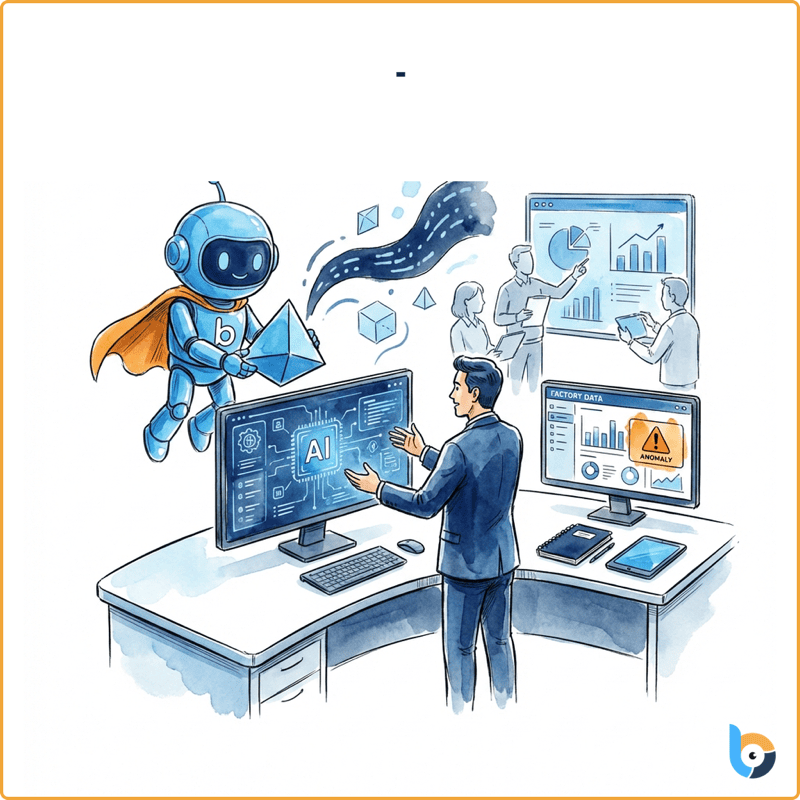
AI Enters the QHSE World: Passing Trend or Real Revolution?
Artificial intelligence is everywhere in the news. But beyond the buzz, what does it concretely bring to the daily life of a QHSE manager? The answer is: far more than you think, provided you understand what it can and cannot do.
What AI Can Do for Your QHSE Today
1. Clause-by-Clause Compliance Analysis
AI can analyze your existing documentation and compare it against the requirements of each clause of an ISO standard. In a matter of minutes, it identifies:
- The clauses covered by your documentation
- The gaps between your documented practices and the requirements
- The missing evidence needed to demonstrate compliance
- Inconsistencies between documents
Real-world example: You upload your quality manual, procedures, and records. The AI reviews everything and produces a detailed clause-by-clause report for ISO 9001, with a compliance percentage and specific recommendations for each gap.
2. Audit Evidence Collection and Organization
Preparing for an audit often means hunting for scattered evidence: management review minutes, training records, indicator results, non-conformity reports. AI can:
- Scan your document repository to identify relevant evidence
- Automatically associate evidence with the corresponding standard clauses
- Flag outdated or insufficient evidence
- Generate a structured and complete audit file
3. Assisted Document Drafting
AI can help you draft or improve:
- Quality, environmental, and OH&S policies
- Procedures and standard operating procedures
- Corrective action plans
- Management review minutes
- Risk analyses
AI generates a structured first draft that you then adapt to your specific context. You save time without sacrificing customization.
4. Predictive Risk Analysis
By analyzing your historical data (accidents, non-conformities, incidents), AI can identify patterns invisible to the human eye:
- Correlations between working conditions and accidents
- Seasonal trends in non-conformities
- Predictive factors for incidents (workload, turnover, maintenance)
- Positions or activities with increasing risk levels
5. Automated Regulatory Watch
AI can continuously monitor regulatory changes and alert you to:
- New regulations that apply to your business
- Amendments to existing legislation
- The impact on your management system
- Actions required to maintain compliance
What AI Cannot Do
It is equally important to understand the limitations:
AI Does Not Replace Field Expertise
AI analyzes data and text. It cannot:
- Observe actual working conditions
- Assess the safety culture of a team
- Understand the human dynamics that influence quality
- Replace direct observation during a shop floor audit
AI Does Not Make Decisions
AI recommends; the QHSE manager decides. You are the one who knows your context, your constraints, your corporate culture. AI helps you decide faster and with more information, but the responsibility remains human.
AI Can Be Wrong
AI models are not infallible:
- They may misinterpret a standard requirement
- They may miss a context specific to your industry
- They may produce plausible but inaccurate content
This is why every AI output must be reviewed by a human expert.
Concrete Use Cases
Case 1: ISO 9001 Audit Preparation
Before AI:
- 2 weeks of manual evidence gathering
- Tedious clause-by-clause verification
- Risk of missing elements
With AI:
- Automatic documentation scan in minutes
- Clause-by-clause compliance report
- List of missing evidence
- Suggestions for documentation to produce
Result: Audit preparation goes from 2 weeks to 2 days.
Case 2: Non-Conformity Analysis
Before AI:
- Manual analysis of each NC
- Root cause identification based on experience alone
- Difficulty spotting trends
With AI:
- Automatic NC classification by type and severity
- Identification of recurring root causes
- Pattern detection (same supplier, same workstation, same period)
- Preventive action suggestions based on historical data
Case 3: Action Plan Generation
Before AI:
- Manual drafting of action sheets
- Empirical prioritization
- Intuitive deadline estimation
With AI:
- Automatic generation of action sheets from findings
- Prioritization based on criticality and historical data
- Suggested owners and deadlines based on past practices
How to Integrate AI into Your QHSE Approach
Step 1: Identify Your Priority Use Cases
Do not try to automate everything. Start with the tasks that consume the most time and where AI delivers immediate value:
- Audit preparation
- Document analysis
- Regulatory compliance monitoring
Step 2: Choose Integrated Tools
The most effective AI is the one embedded in your QHSE tool, not a separate application. It has access to your data, your context, your history. A generic chatbot does not know your company.
Step 3: Train Your Teams
AI is a tool. Like any tool, it requires training to use properly:
- Understand what AI can and cannot do
- Learn to formulate precise requests
- Verify and validate outputs
- Integrate AI into existing processes
Step 4: Measure and Iterate
Track concrete gains:
- Time saved on automated tasks
- Quality of the analyses produced
- User satisfaction
- Impact on QHSE performance (number of gaps detected, processing times)
The Future of AI in QHSE
Likely upcoming developments:
- Real-time assisted audits: AI accompanies the auditor in the field, suggests questions, verifies answers
- Predictive maintenance: Anticipating failures of equipment critical to quality or safety
- Adaptive training: Personalized training paths based on each employee’s competencies and risk exposure
- Image analysis: Automatic detection of hazardous situations via surveillance cameras
- Autonomous agents: AI systems capable of carrying out complete QHSE tasks end-to-end
Conclusion
AI in QHSE is neither a gimmick nor a replacement for the QHSE manager. It is a capability amplifier that allows you to accomplish in hours what used to take days, spot invisible patterns, and dedicate your time to what truly matters: the shop floor, the teams, the decisions.
Companies that adopt it early will gain a significant advantage, not because AI is magical, but because it frees up time for what truly makes the difference: prevention, improvement, and the human element.
Betterfly integrates BetterAssist, an autonomous AI agent dedicated to QHSE. Clause-by-clause compliance analysis, automated evidence collection, action plan generation: discover how AI can transform your daily operations. Request a demo.